
Do You Need an Asbestos Test Before Water Damage Tear-Out in Utah?
When a basement floods or a pipe bursts inside a ceiling, the usual fix includes cutting out wet drywall, pulling soaked insulation, and sometimes removing flooring or a ceiling. In an older Utah home, some of those materials may contain asbestos. Disturbing them without knowing can put fibers into the air of the house you live in.
This post covers which homes and materials are worth testing, what Utah's asbestos rule says about homeowners and rentals, and how testing fits around the urgent work of drying.
The short version: if your home was built before 1980 and wet drywall, ceiling texture, flooring or pipe insulation is about to come out, ask whether an asbestos test is needed first. Rentals and condo buildings with more than four units are more likely to require one. This is general information, not legal advice; for a specific situation, ask your adjuster or a Utah attorney.
Which Utah Valley homes should think about asbestos?
Asbestos was used in many building products through the 1970s. Utah Valley has a large share of homes from that era. According to the Census Bureau's American Community Survey, 37% of Orem's homes and 46% of Provo's were built before 1980, and 29% of Provo's were built before 1970. If your house is from that period, its original drywall joint compound, ceiling texture or flooring could contain asbestos. Newer homes are much less likely to, but remodels and later additions can mix materials of different ages.
Materials often tested before water damage tear-out include:
- "Popcorn" or other sprayed and textured ceilings.
- Drywall joint compound and wall texture.
- Older sheet vinyl and floor tile, and the adhesive (mastic) under them.
- Insulation on older pipes or ducts.
- Some plasters.
You can't tell by looking. Only a lab test of a sample settles it.
What Utah's asbestos rule says
Asbestos in renovation and demolition is regulated by the Utah Division of Air Quality under rule R307-801. The core requirement is that the owner or operator of a regulated building being renovated or demolished make sure it's inspected by a Utah-certified asbestos inspector before materials are disturbed.
There's an important exemption. The rule says owners of residential structures, including condominium owners, of four units or less are generally not required to have that inspection, as long as the building isn't otherwise subject to the federal asbestos rules. A few points about that exemption:
- It's about the inspection requirement, not about safety. Being exempt doesn't make the material safe to tear out, so many homeowners still choose to test.
- Owner-occupancy isn't spelled out in the rule text as a condition, but how it applies to a rental isn't obvious either. Provo is about 60% renter-occupied, so this comes up a lot. Landlords should confirm with DAQ before tear-out.
- Condo complexes with more than four units fall outside the exemption and generally must inspect. If you're in a larger condo building, talk to your HOA or property manager before anything comes out.
- Larger projects and demolition carry notification rules. Above certain quantities, DAQ requires notice before removal, and demolition notices are due at least 10 working days ahead.
For anything beyond a single-family home, read the rule and contact Utah DAQ's asbestos program. If your situation is unclear, ask a Utah attorney.
Won't testing slow down the drying?
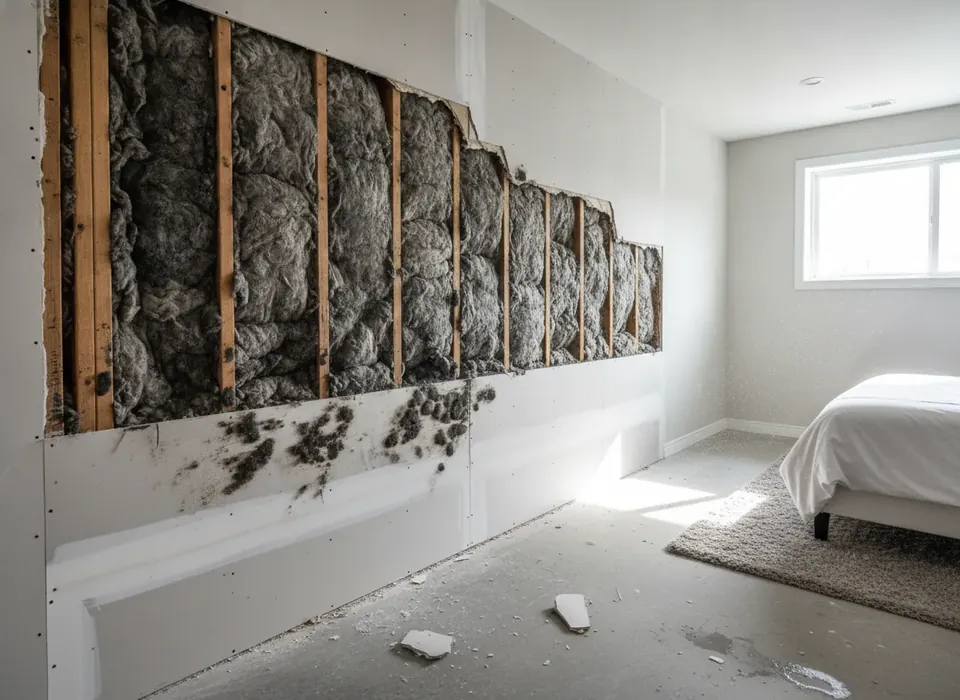
Usually less than people fear. Standing water can generally be extracted, and air movers and dehumidifiers can be set up, without cutting into walls or ceilings. Testing fits into that window. A certified inspector takes small samples of the materials that would come out, and a lab analyzes them.
Speed still matters. Wet drywall and carpet pad are where mold gets going, and the commonly cited window is 24 to 48 hours. So when you first talk to a restoration company, say how old the house is and ask how they handle suspect materials. Ask whether they can start extraction and drying while samples are tested, and how they'll keep wet materials from getting worse in the meantime. Our step-by-step process page shows where tear-out falls in a typical job.
What if a test comes back positive?
Then the affected material has to come out in a controlled way, by people trained and certified for it, before or as part of the normal tear-out. That usually means containment, wetting, careful bagging and proper disposal. It adds cost and time, and it's not a step to improvise. Ask the companies you're considering whether they handle asbestos abatement themselves or bring in a separate certified firm, and get that in writing.
A positive result doesn't mean everything in the house is affected. Often it's one material, such as the ceiling texture, while the wall drywall is clean, and the rest of the job can go ahead normally.
Lead paint in pre-1978 homes
Asbestos isn't the only older-home issue. In homes built before 1978, renovation work done for pay that disturbs painted surfaces generally falls under Utah's lead-based paint program, which is run by Utah DAQ. Firms and individuals doing that work must be certified as lead-safe renovators. If your home is from that era, ask the companies whether they're lead-safe certified before tear-out begins.
Does insurance pay for asbestos testing?
It depends on your policy and the claim. When testing is a necessary step in repairing covered water damage, some adjusters include it. Ask your adjuster before the inspector comes out, and keep the lab report with your claim documents. Our post on Utah water damage insurance claims covers documentation and deadlines.
Questions to ask before any tear-out
- Given the age of this house, do you recommend an asbestos test before removing these materials?
- Who takes the samples, and are they a Utah-certified inspector?
- If a material tests positive, who does the abatement, and is that a separate contract?
- Are you lead-safe certified for pre-1978 homes?
- What's your Utah DOPL license number? Tear-out and rebuild are construction work. See how to check a Utah contractor license.
- Can drying start while we wait for results?
What it all costs
Water damage costs depend heavily on what has to be removed. National guides put drywall repair after water damage at about $1.50 to $3 per square foot, and drying a 500-square-foot basement at about $2,000 to $7,000 before repairs (Fixr, 2025). Asbestos testing and any abatement are added on top. Ask each company to price them as separate line items so you can compare. The Orem water damage cost guide has the full table.
If you're dealing with wet drywall in an older home, you can describe it once on our free quote form. Mention the year the house was built, and independent Utah Valley companies will reply directly.
Questions people ask
Do I need an asbestos test before removing wet drywall in Utah?
Owners of homes with four units or fewer are generally exempt from Utah DAQ's inspection requirement, but the exemption doesn't make the material safe. If the home was built before 1980, testing before tear-out is a sensible step. Rentals and larger condo buildings may require an inspection.
Which materials might contain asbestos in an older home?
Common candidates include popcorn and textured ceilings, drywall joint compound, older vinyl flooring and its adhesive, pipe and duct insulation, and some plasters. You can't tell by looking; only a lab test of a sample can confirm it.
Can drying start before asbestos test results come back?
Often, yes. Extraction and setting up air movers and dehumidifiers usually don't disturb walls or ceilings. Ask the restoration company how they handle suspect materials and whether they can start drying while samples are tested.
Does a landlord need an asbestos inspection before water damage repairs?
Possibly. Utah's rule exempts owners of residential structures of four units or fewer, but how it applies to rentals isn't spelled out. Condo buildings over four units generally must inspect. Confirm with Utah DAQ or a Utah attorney.